WINDSCREENS: EFFECTIVE PROTECTION FROM WIND, RAIN, & COLD
My ranch north of Austin, Texas, has an 8,000 square foot open-sided goat barn with working pens , chutes, and vet building under it. Six pastures radiate outward from the west, north, and east sides. The pastures' shelters are the outer 14 feet of three sides of the structure.
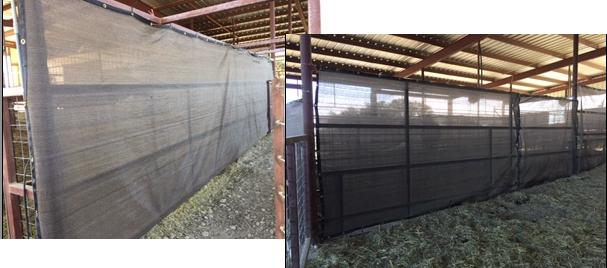
I knew when I had the open-sided building constructed that I would need to provide wind, rain, and cold barriers for the goats. I decided to go through late winter, spring, summer, and early fall seasons to learn prevailing winds and weather patterns. Fellow goat raiser Kyle Casford of Lampasas, Texas, helps me with the goats and came up with the brilliant idea of using fabric windscreens. We determined the areas that needed protection and divided the windscreens into manageable sections, based upon the building's metal supports, for ease of handling and installation. Kyle recorded the measurements section by section. I researched windscreens and decided to purchase from www.windscreens4less.com. I chose the most wind-resistant material density (180 gsm) and a brown-black coloration that blends with the metal structure. The material blocks 80% of wind while allowing good visibility through it. Plastic electrical ties were used to attach the fabric to the structure through the many grommets incorporated into the sides, top, and bottom of each panel.
Custom made in California, the reasonably priced panels arrived in about two weeks. I intend to keep them up during winter, then hose them off in the spring, let them air dry, take them down, and box them for storage for the next winter's use. I don't know how long these panels will last, but if it is as little as three years, I will have gotten my money out of them. As the panels need replacing, we will adjust the sizing and design as needed.
The goats love them. They are already in their respective sections of windscreen-protected areas each night when I turn on the security lights.
Suzanne Gasparotto, ONION CREEK RANCH, Texas 12/1/18
|