August 2026 Issue |
||||||||
 |
||||||||
• Subscribe to Meat Goat Mania • Email Us • Onion Creek Ranch • Bending Tree Ranch • OCR Health & Management Articles • MGM Archive |
||||||||
 |
|
|
|
|
|
|
|
|
|
|
|

Subscribe FREE now! Monthly issues with new articles and other educational information on meat goat health, nutrition, and management written by Suzanne W. Gasparotto of Onion Creek Ranch and Pat Cotten of Bending Tree Ranch. In all cases, it is your responsibility to obtain veterinary services and advice before using any of the information provided in these articles. Neither Suzanne Gasparotto nor Pat Cotten are veterinarians. None of the contributors to this website will be held responsible for the use of any information contained herein. |
||||||||||||||||||||||||||||||||||||||||||||||||||||||||||||
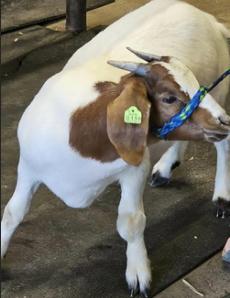
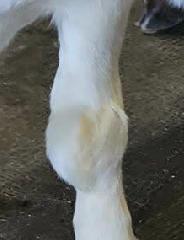
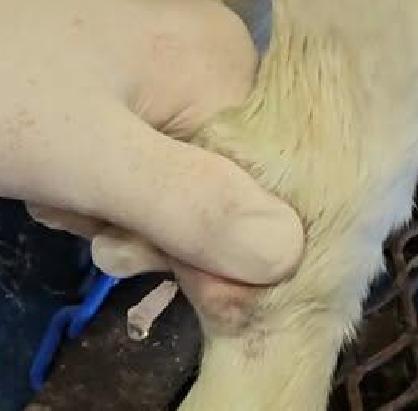
PSEUDO-BURSITIS IN GOATS Problem: Four-month old doeling presented with fluid-filled pocket on her left front knee. No evidence of awareness of the problem on her part; she was putting full weight on the leg without pain or discomfort.
Anticipating the possible advent of Joint Ill, which made no sense at her age but I didn't want to chance infection in the joint, I started her on a five-day course of Excenel RTU, dosing at 1/2 cc given SQ. Excenel RTU dosage is 2 cc per 100 pounds body weight. As I was making a trip to the vet with other goats, I took her along for examination. At the vet's request, I sent a video of her knee. He anticipated an abcess. In-office examination diagosis was no abscess, but instead "pseudo-bursitis." I've been raising goats since 1990 and never heard of this issue. My very capable goat vet said it doesn't happen often but is a real thing. He said that sometimes kids who get down on their front knees to nurse their dams can develop what might commonly be be called "water on the knee." Solution: Vet shaved hair off the knee, then sanitized the skin and drained the fluid. He injected Kenalog, a long-acting vet usage only steroid, wrapped the knee with vet wrap, and sent her home to her dam and her herd. He said it would not recur. Vet wrap was removed after five days. So far, so good.
The things that goats develop never cease to amaze me, even after 35+ years of raising them. Suzanne W. Gasparotto, ONION CREEK RANCH, Briggs, Texas 8.1.26 |
||||||||||||||||||||||||||||||||||||||||||||||||||||||||||||
|
||||||||||||||||||||||||||||||||||||||||||||||||||||||||||||
|
|
|
|
|
|
|
||||||||||||||||||||||||||||||||||||||||||||||||||||||



|
|||||||||
|
|
|
|||||||


|
Diarrhea in goats is the body's short-term solution to an underlying problem that the goat cannot solve and you must fix. Diarrhea is NOT an illness. Diarrhea is a SYMPTOM of a serious health problem, and it can be the result of the goat's body cleaning toxins out. You must figure out which it is BEFORE you give any medications, including scour halt products. Do NOT attempt to stop diarrhea (scouring) until you figure out the underlying problem. Keep the goat hydrated while you (quickly) determine its cause. There are four major causative agents of diarrhea in goats: bacteria, viruses, parasites (worms and cocci), and management practices (i.e., overcrowding, poor sanitation, or nutritionally-induced problems such as overfeeding). When you see diarrhea in one of your goats, do not run for scour halt medications. Figure out what is causing the scouring, then treat appropriately. Use a rectal thermometer to take the goat's body temperature. Do a microscopic examination of the feces. Check the goat for dehydration. I have never found the skin-pinch test to be helpful in determining dehydration. It doesn't take much reduction of water in the rumen to change the pH from alkaline to acidic and result in a sick goat. With ANY sick goat, do a fecal using a McMasters slide to find out worm and cocci loads. Almost everything begins with Haemonchus contortus ( barberpole stomach worm). Diarrhea can be the symptom of many different illnesses, including bloat, ruminal acidosis, laminitis/founder, copper deficiency, aflatoxin poisoning, anaphylactic shock, plant toxicity/poisoning, renal (kidney) failure, selenium toxicity, coccidiosis, enterotoxemia (clostridium perfringens type C&D), salmonellosis, E. Coli, caprine herpes virus, heavy parasite infestation, and goat polio. Take a fecal sample and do a fecal egg count before starting treatment. Read my article entitled Doing Your Own Fecals is Easy (www.tennesseemeatgoats.com). Diarrhea is not always the result of an infectious disease. It can be nutritionally induced by overfeeding on milk or grain, by using poor-quality milk replacers, or by sudden changes in feeding schedules or in the type of feed, hay, or forage/browse being offered. Diarrhea the consistency of pudding or even watery stool is sometimes the body's way of purging itself of toxicity. If the feces is slightly soft or pudding-like, I let it run its course while I figure out the cause, keeping the goat hydrated with electrolytes and monitoring rectal temperature. When body temperature is above the normal range of 101.5 to 103.5 degrees F., I use a fever medication (vet script: Banamine injection) and if I conclude that it is a rumen-related problem, an antibiotic (vet script: SMZ-TMP tablets) to control infection while hydrating the goat with electrolytes. Very watery diarrhea requires more diagnosis and intervention. Black diarrhea indicates blood in the stool and likely coccidia. Grey or whitish diarrhea may point to E Coli or salmonella. Green diarrhea usually means the goat ate too much fresh green forage. Brown diarrhea, sometimes tinged with red, is common with does who have kidded and post-birthing debris is being passed. Neonatal Diarrhea Complex, which is the term used to describe diarrhea occurring in kids under one month of age, usually occurs during kidding season when extremes of weather take place, for example, excessive heat or cold or heavy rains. Kids do not have functioning immune systems. Dehydration, acidosis, electrolyte depletion, and hypoglycemia (low blood sugar) can result. The kid becomes weak and can't stand, has a dry mouth and cold extremities, body temperature drops below normal, and the suck response may be lost. If the conditions are right to convince me that dehydration is a real possibility, I will use an oral cattle electrolyte (ReSorb or Bounce Back) and stomach tube the goat if it won't drink on its own. I will administer sterile Lactated Ringers Solution electrolytes under the skin (sub-cutaneously) if the goat is seriously dehydrated and body temperature is sub-normal (less than 100*F). NEVER put fluids into a cold stomach (body temp below 100*F.) I also use Lactated Ringers Solution (vet prescription) for subcutaneous rehydration in goats which I have concluded that additional liquids should not be added to their stomach contents. This is hard to describe, but sometimes a sick goat will have a sloshy feel or sound in the rumen which experience tells me that adding fluid to that rumen isn't the way to rehydrate it. There are articles on the Articles page at www.tennesseemeatgoats.com that detail which products I use and under which circumstances. Sick kids should be isolated from the herd (preferably staying with their dams if circumstances will allow), placed in sanitary facilities, and fed from containers that are raised above ground level to prevent further contamination. Administration of oral and sub-cutaneous electrolytes along with an appropriate broad-spectrum antibiotic (liquid Sulfamethoxazole with Trimethprim: vet script) is my treatment protocol for kids. My preferred oral electrolyte product is either ReSorb or Bounce Back. I don't use any oral product that has psyllium or clay as an ingredient. If I determine that the problem involves toxicity, the laxative Milk of Magnesia is used orally to induce mild diarrhea so that the goat's digestive system can be stimulated to pass the toxic material. Laxatives are dehydrating, so electrolytes must be administered orally. Coccidia and/or worms are often the cause of diarrhea in kids. Both of these conditions are transmitted by fecal-to-oral contact and occur most often in heavily managed situations where pens and troughs are not kept clean and dry and where overcrowding exists. Accurate diagnosis of worm load and coccidia oocyst infestation is possible only by doing a microscopic fecal count using gridded McMasters slides. Diarrhea caused by coccidia is best treated with oral doses of Albon or its generic equivalent Sulfadimethoxine 12.5% (vet script). How I use this product is described in my article on Coccidiosis on the Articles page of www.tennesseemeatgoats.com. CoRid (amprollium) is still available over the counter, but you must use Vitamin B1 (thiamine) injections along with CoRid because amprollium is a thiamine inhibitor. Overfeeding on grain (sacked feed, shell or cracked corn, formulas concocted by the goat raiser or colleagues) or quick changes in feed, hay, or forage/browse can cause severe ruminal acidosis, shutting down the goat's digestive system, and can result in death. Heavy parasite loads can cause diarrhea in kids and adult goats. Almost anything which messes up the proper functioning of the goat's rumen can cause scouring. You are "feeding the rumen, not the goat." NEVER feed sweet feed/horse and mule feed/textured feed/ sileage/haylage/baleage (no molasses-add alfalfa-based products like ChaffHaye at my ranch) to goats. Any feed that is molasses based can mold and cause serious illnesses like Listeriosis. Gastroenteritis, usually caused by E. Coli or other similar bacteria, should be medicated with SMZ-TMP tablets in adults and SMZ-TMP liquid in kids. All sulfa-based products are prescription only. Never use Immodium AD to control diarrhea in a goat. This product can stop the peristaltic action of the gut, bringing the digestive process to a halt, and death can be the result. Recognize diarrhea may be a symptom of a serious health problem and investigate to find the cause before running for scour halt medications. Sometimes, but not always, diarrhea is helpful in clearing up what is wrong with the goat and supportive care may be all that is needed. Suzanne W. Gasparotto, ONION CREEK RANCH, Texas 8.1.26 |
||
|
|
|
|
|||||||||||||||||||||||||||||||||||||||||||||||||||||||||||||||||||||||||||||||||||||||||||||||||||||||||||||||||||||||||||||||||||||||||||||||||||||||||||||||||||||||||||||||||||||
|
|
|
|||||||||||||||||||||||||||||||||||||||||||||||||||||||||||||||||||||||||||||||||||||||||||||||||||||||||||||||||||||||||||||||||||||||||||||||||||||||||||||||||||||||||||||||||||


|
||
|
|
|
|
||||||||||||||||||||||||||||||||
|
|
|
||||||||||||||||||||||||||||||
