 |
||||||||
 |
||||||||
 |
||||||||
 |
||||||||
 |
|
|
|
|
|
|
|
|
 |
||
|
|
|
 |
||||||
|
|
|
|
|
|
|

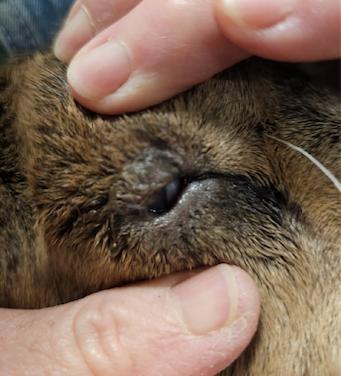
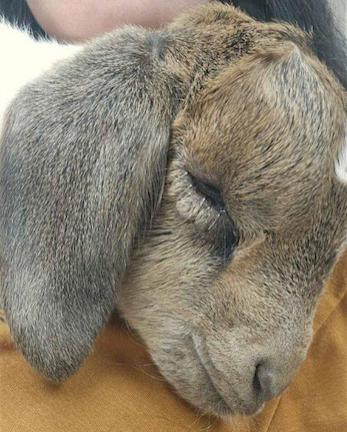
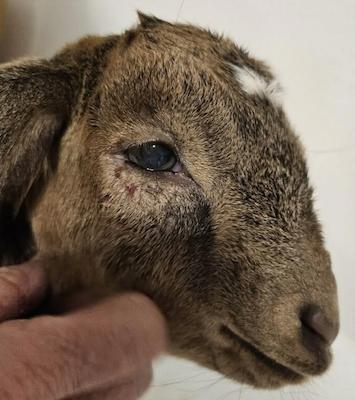
ENTROPION Entropion is an eyelid problem seen in newborn goats in which the eyelids are turned inward, causing eyelashes to rub on the eyeball. Usually occurring in the lower eyelid, it can affect upper eyelids as well. Painful to the goat, Entropion causes excessive tearing along with matted and swollen-shut eyes. Serious infection and ulceration can occur if not treated immediately. Loss of sight is possible. Often seen in the Boer breed but not restricted only to Boers, there is some evidence that Entropion may be hereditary. Congenital Entropion occurs in newborn and very young kids. Spastic Entropion occurs in older goats and can be the result of an injury to the eyelid. Entropion can be mistaken for Pinkeye. A goat with what appears to be Pinkeye that is not clearing up after its herdmates have recovered may instead have Entropion. Entropion in newborn kids is usually easily remedied with prompt care. Three-times-a-day application of Terramycin ophthalmic ointment into the kid's eyes for a week to 10 days usually gives the newborn kid's body time to develop some fatty tissue in the eyelid that will force the lashes outward. If application of eye ointment doesn't solve the problem, without using sedatives veterinarians can use a staple gun and staple the lower eyelid outward to hold it in place. Ophthalmic antibiotic cream is applied several times a day while the staples are in place. After 10 to 14 days, the staples can be removed. Stents may be necessary to roll the upper eyelid; sometimes veterinarians inject a small amount of penicillin into the upper eyelid instead of using stents. You cannot ignore Entropion. The goat may well lose its sight if the problem is not corrected. Suzanne W. Gasparotto, Onion Creek Ranch, Texas 5.1.26 Photos below of kid with entropian. |
||
|
|
|
 |
||||||
 |
||||||
Before correction |
||||||
|
|
|
|
|
|
|
Staples in place. |
||||||
 |
||||||
After staple removal. |
||||||
|
|
|
|
|
|
|
 |
||||||
 |
||||||
|
||||||
|
|
|
|
|
|
|
Important! Please Read This Notice! All information provided in these articles is based either on personal experience or information provided by others whose treatments and practices have been discussed fully with a vet for accuracy and effectiveness before passing them on to readers. In all cases, it is your responsibility to obtain veterinary services and advice before using any of the information provided in these articles. Suzanne Gasparotto is not a veterinarian.Neither tennesseemeatgoats.com nor any of the contributors to this website will be held responsible for the use of any information contained herein. |
||
|
|
|
The author, Suzanne Gasparotto, hereby grants to local goat publications and club newsletters, permission to reprint articles published on the Onion Creek Ranch website under these conditions: THE ARTICLE MUST BE REPRODUCED IN ITS ENTIRETY AND THE AUTHOR'S NAME, ADDRESS, AND CONTACT INFORMATION MUST BE INCLUDED AT THE BEGINNING OF THE REPRINT. We would appreciate notification from any clubs or publications when the articles are used. (A copy of the newsletter or publication would also be a welcome addition to our growing library of goat related information!) |
||
|
|
|
 |
||
|
|
|
All information and photos copyright © Onion Creek Ranch and may not be used without express written permission of Onion Creek Ranch. TENNESSEE MEAT GOAT ™ and TEXMASTER™ are Trademarks of Onion Creek Ranch . All artwork and graphics © DTP, Ink and Onion Creek Ranch. |
||
|
|
|