March 2020 Issue |
||||||||
 |
||||||||
IN THIS ISSUE: |
||||||||
• Subscribe to Meat Goat Mania • Email Us • Onion Creek Ranch • Bending Tree Ranch • OCR Health & Management Articles • MGM Archive |
||||||||
 |
|
|
|
|
|
|
|
|
|
|
|

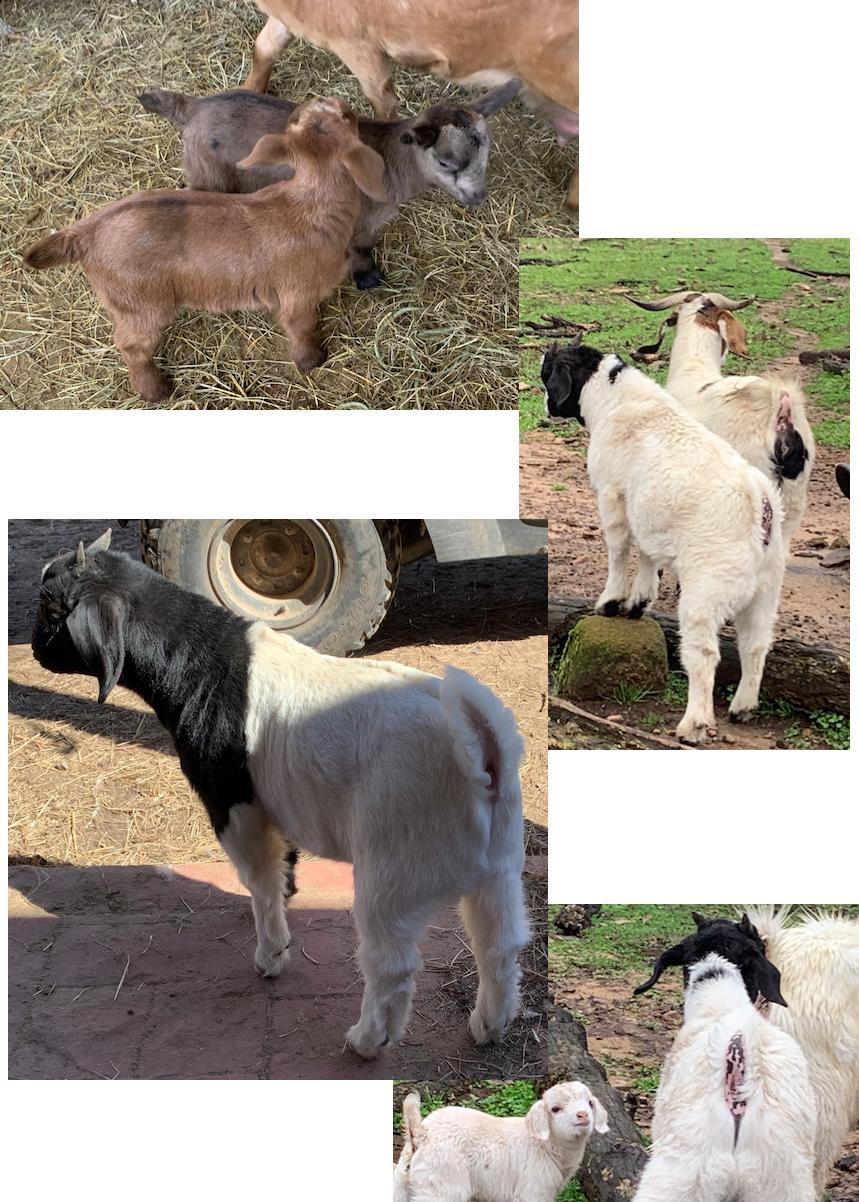
GRAFTING KIDS The Best Way to Handle Orphaned and Rejected Kids Occasionally you will encounter a kid that has been orphaned, is hypothermic, has not bonded with its dam, or has had the bond broken with its dam, leaving it without adequate nutrition (milk). The best course is to make the dam nurse its kid, if she is available. With a weak (hypothermic) kid whose dam is able to nurse it, try to use the dam's colostrum and milk when feeding the kid. Dams identify their kids primarily by smell. Notice how they smell the rear of each kid that gets near them. Dams are checking for their scent of their own milk in the kids' feces. If the kid is a weak newborn, the immediate short-term solution to getting nutrition into it is to stomach tube some of the dam's colostrum into the kid. When the kid is stabilized enough to go back to its dam, smear some of the dam's placental tissue over the kid's body. If placental tissue isn't available, put some of the dam's colostrum or milk on the kid's nose, head, butt, and along its spine (topline) in an effort to convince the dam that it is her kid. If you want the kid to nurse its dam or graft it onto another dam, do not put the kid on a bottle. It will get used to the feel of the nipple and will resist sucking a teat that feels different. If the doe is rejecting the kid because it is hypothermic/weak, putting the kid back with its dam will probably have to be delayed for several days. Using the dam's milk is therefore more important for re-bonding. Don't put a sick or weak kid with its dam too soon. You can always take steps to get its dam to take it back once you get the kid healthy. It will relapse quickly and possibly die if you rush this process. Fellow long-time goat raiser Pat Cotten of Bending Tree Ranch near Damascus, Arkansas puts the problem kid, once stabilized, and its siblings in a wire crate inside the dam's pen. Then she lets the kids out several times a day to nurse so that they eat at the same time. In a couple of days, the dam usually treats them all equally. If the kid is several weeks old and doing poorly, it has likely never had a full tummy in its life and is used to getting along on what milk it can steal, so it is wise to stomach tube the kid small amounts several times so it knows what a full tummy feels like. Keep water buckets out of the kid's reach; the starving kid will drink water to fill its stomach and you will soon find it dead. The kid may have to be allowed to get a little bit hungry before it will nurse the dam's teat. Hold the dam and make her let the kid nurse several times a day. After about a week, even the most determined dam should accept the kid if the kid is about the same size and age of the kids she lost or the kids she currently has nursing her. If the dam will not or cannot take the kid, then you must graft it onto another dam with fewer kids or a dam whose kids have died. But do not overload her. If she has one kid, give her a second one. Do not make her take another kid if she already has two kids of her own. While it is not impossible to get a dam with nursing kids to accept and raise kids younger or older than hers, it usually works much better when the kids are of similar age and size. It is important for both you and the kid that it not become a bottle baby. Sometimes it is unavoidable when other does aren't available to adopt it. It is much easier to spend a week convincing a doe to adopt a kid than to bottle it for three months (not to mention costs involved) plus the kid will not have had its adaptability taken from it by making it a bottle baby. Suzanne W. Gasparotto, Onion Creek Ranch, Texas 3.2.20 References available at www.tennesseemeatgoats.com : |
|
|||||||||||||||||||||||||||||||||||||||||||||||||||||||||||||||||||||||||||||||||||||||||||||||||||||
PERSONALIZED CONSULTATION SERVICES AVAILABLE Goat Management, Health, Nutrition Suzanne W. Gasparotto, owner of Onion Creek Ranch in Texas, developer of both the Tennessee Meat Goat™ and the TexMaster™, and author of dozens of articles on meat goat health, nutrition, and management over the last 25+ years, is now offering individualized consultation services to goat raisers. Suzanne is not a vet but has extensive experience raising quality meat goats since 1990 and will tell you what she would do to solve a specific problem if the goats were hers. Raising meat goats full time since January 1990, Suzanne has extensive experience to apply to hands-on problems of raising goats. Correct information on goats is hard to find. Few vets know anything about goats. Information on the Internet is often wrong. Personal access to Suzanne Gasparotto via cell phone, email, and text is available for $20 per month and calculated through December 31 of the current calendar year in which you subscribe. There is no limitation to the number of contacts you may have with Suzanne. There are two ways to subscribe: Mail a check or money order made payable to Suzanne W. Gasparotto to or Download the CASH app to your phone from either the iPhone Store or the Google Play Store and use your debit card to send the appropriate amount to $SuzanneGasparotto. Send your contact information (cell phone, home phone, email address) via email to onioncrk@centex.net. People who have five goats or less who desire help, please contact Suzanne Gasparotto at onioncrk@centex.net for how to sign up for services on a case-by-case basis. Suzanne Gasparotto, Onion Creek Ranch, Briggs, Texas onioncrk@centex.net 512.265.2090 |
||||||||||||||||||||||||||||||||||||||||||||||||||||||||||||||||||||||||||||||||||||||||||||||||||||||
|
|
|
|
|
|
|
||||||||||||||||||||||||||||||||||||||||||||||||||||||||||||||||||||||||||||||||||||||||||||||||




|
|||||||||||||||||||||||||||||||||||||||||||||||||||||||||||||||||
|
|
|
|||||||||||||||||||||||||||||||||||||||||||||||||||||||||||||||

|
||
|
|
|
|
||||||||||||||||||||||||||||||||
|
|
|
||||||||||||||||||||||||||||||
